Constrained peek so you can sanity-check the source material without leaving the site.
LanguageTool
LanguageTool is open-source proofreading software for English, Spanish, French, German,
Portuguese, Polish, Dutch, and more than 20 other languages.
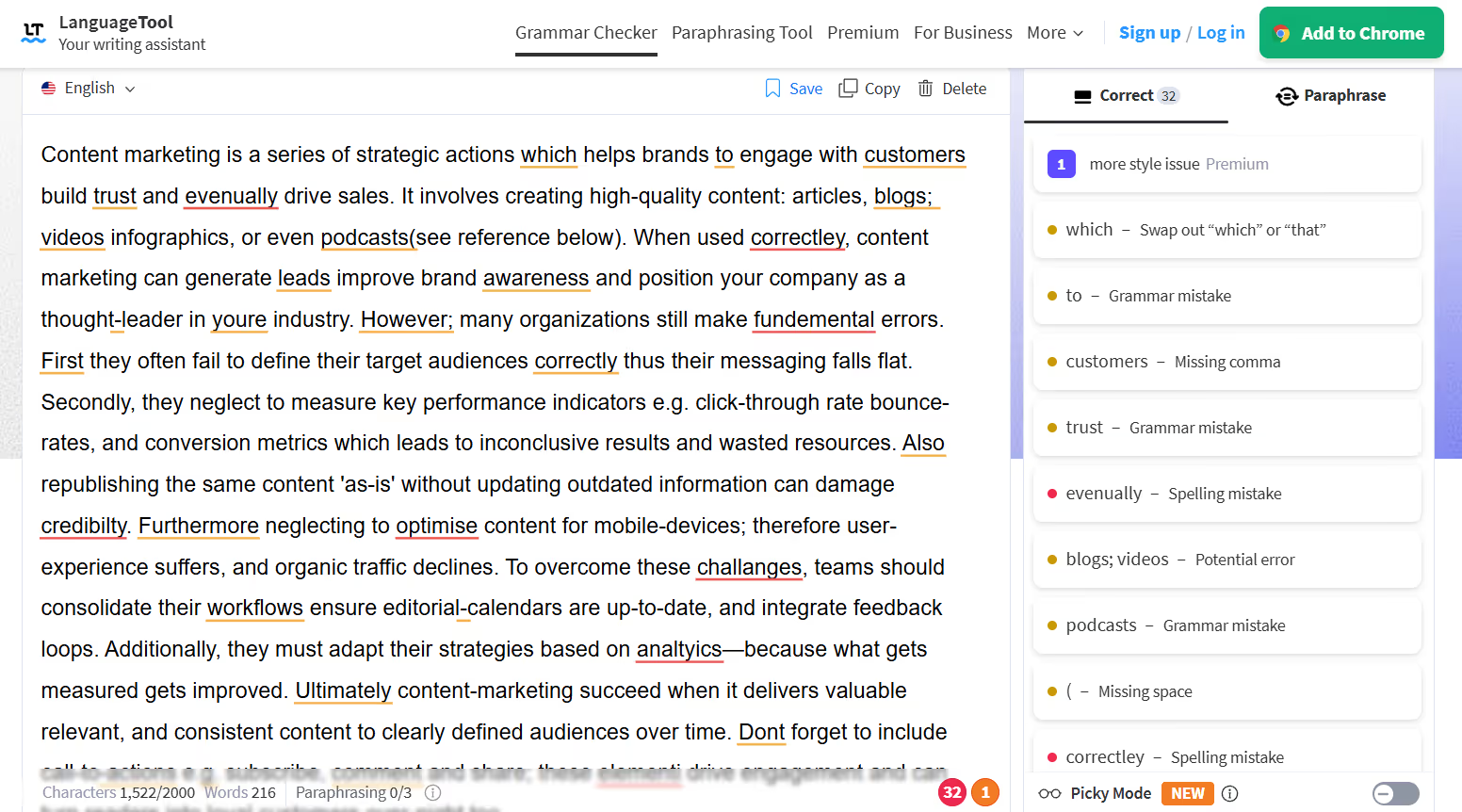
It finds many errors that a simple spell checker cannot detect.
-
LanguageTool Forum
-
How to run your own LanguageTool server
-
HTTP API documentation
-
How to use our public server via HTTP
-
How to use LanguageTool from Java (Javadoc)
For more information, please see our homepage, at languagetool.org,
this README,
and CHANGES.
The LanguageTool core (this repo) is freely available under the LGPL 2.1 or later.
Docker
Try one of the following projects for a community-contributed Docker file:
github.com | hub.docker.com/r |
|---|
meyayl/docker-languagetool | meyay/languagetool |
Erikvl87/docker-languagetool | erikvl87/languagetool |
silvio/docker-languagetool | silviof/docker-languagetool |
Contributions
The development overview describes
how you can contribute error detection rules.
For more technical details, see our dev pages.
Scripted installation and building
To install or build using a script, simply type:
#!/usr/bin/env sh
curl -L https://raw.githubusercontent.com/languagetool-org/languagetool/master/install.sh | sudo bash $options
If you wish to have more options, download the install.sh script. Usage options follow:
<blockquote>
sudo bash install.sh <options>

Usage: install.sh <option> <package>
Options:
   -h --help                   Show help
   -b --build                  Builds packages from the bleeding edge development copy of LanguageTool
   -c --command <command>      Specifies post-installation command to run (default gui when screen is detected)
   -q --quiet                  Shut up LanguageTool installer! Only tell me important stuff!
   -t --text <file>            Specifies what text to be spellchecked by LanguageTool command line (default spellcheck.txt)
   -d --depth <value>          Specifies the depth to clone when building LanguageTool yourself (default 1).
   -p --package <package>      Specifies package to install when building (default all)
   -o --override <OS>          Override automatic OS detection with <OS>
   -a --accept                 Accept the oracle license at http://java.com/license. Only run this if you have seen the license and agree to its terms!
   -r --remove <all/partial>   Removes LanguageTool install. <all> uninstalls the dependencies that were auto-installed. (default partial)

Packages(only if -b is specified):
   standalone                  Installs standalone package
   wikipedia                   Installs Wikipedia package
   office-extension            Installs the LibreOffice/OpenOffice extension package

Commands:
   GUI                         Runs GUI version of LanguageTool
   commandline                 Runs command line version of LanguageTool
   server                      Runs server version of LanguageTool
</blockquote>
Alternate way to build from source
Before start: you will need to clone from GitHub and install Java 17 and Apache Maven.
Warning: a complete clone requires downloading more than 500 MiB and needs more than 1 500 MiB on disk.
This can be reduced, if you only need the last few revisions of the master branch
by creating a shallow clone:
#!/usr/bin/env sh
git clone --depth 5 https://github.com/languagetool-org/languagetool.git
A shallow clone downloads less than 60 MiB, and needs less than 200 MiB on disk.
In the root project folder, run:
#!/usr/bin/env sh
mvn clean test
(Sometimes, you can skip Maven step for repeated builds.)
#!/usr/bin/env sh
./build.sh languagetool-standalone package -DskipTests
Test the result in languagetool-standalone/target/.
#!/usr/bin/env sh
./build.sh languagetool-wikipedia package -DskipTests
Test the result in languagetool-wikipedia/target.
Now, you can use the bleeding edge development copy of LanguageTool *.jar files, be aware that it might contain regressions.
How to run under Mac M1 or M2
-
Install Brew for Rosetta:
#!/usr/bin/env sh
arch -x86_64 /bin/bash -c "$(curl -fsSL https://raw.githubusercontent.com/Homebrew/install/master/install.sh)"
-
Install OpenJDK for Rosetta:
#!/usr/bin/env sh
arch -x86_64 brew install openjdk
-
Install Maven for Rosetta: