strong2025-11-02
HN: 365 pts / 153 comments — 'DeepSeek moment for AI agents'Near-viral reception. 'DeepSeek moment' comparison signals major disruption potential.
365 pts, 153 commentsHN community
First fully open-source deep research agent matching closed-source leaders on benchmarks. HLE 32.9 (exceeds OpenAI's 26.6), 30.5B params / 3.3B active (MoE), runs locally. 18.5K stars. Apache 2.0.
Where it wins
HLE 32.9 — exceeds OpenAI's 26.6 on same benchmark
GAIA 70.9, BrowseComp 43.4, FRAMES 90.6 — competitive across all benchmarks
30.5B params, only 3.3B active per token (MoE) — runs on consumer hardware
18,483 stars in ~6 months — rapid growth
365 HN pts / 153 comments — near-viral reception
Apache 2.0 — full commercial use allowed
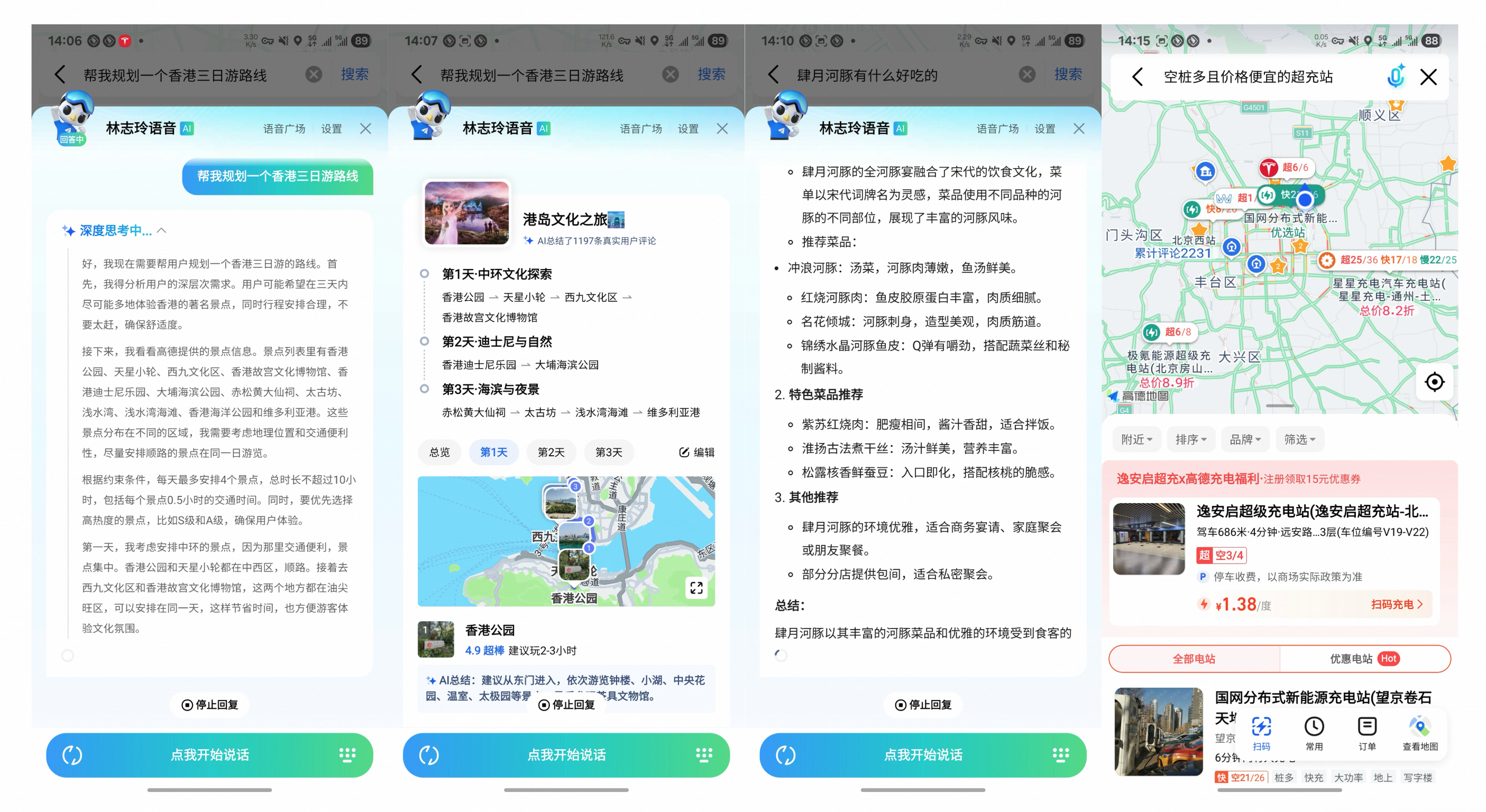
Deployed in Alibaba's Gaode Maps — production-validated
Where to be skeptical
No PyPI/npm download stats — adoption beyond GitHub stars unclear
Newer project (~6 months) — less battle-tested than GPT Researcher
Alibaba corporate backing may concern some users
No MCP server available
Editorial verdict
#5 in research. Open-source disruptor — HLE 32.9 exceeds OpenAI's 26.6 on the same benchmark, runs on consumer hardware via MoE. Called 'the DeepSeek moment for AI agents' by VentureBeat. Ranked below GPT Researcher due to less proven adoption data.
Related
GPT Researcher
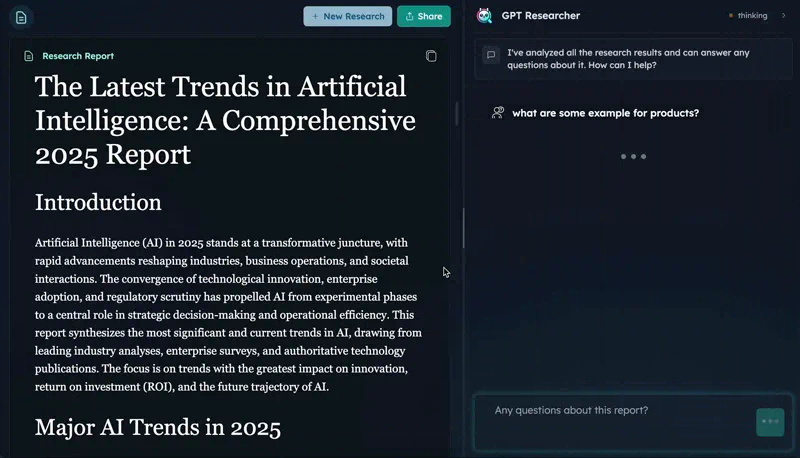
89Open-source autonomous deep research agent. CMU DeepResearchGym #1 on citation quality, report quality, info coverage. 25.8K stars, 15.9K weekly PyPI downloads. Apache 2.0.
STORM (Stanford)
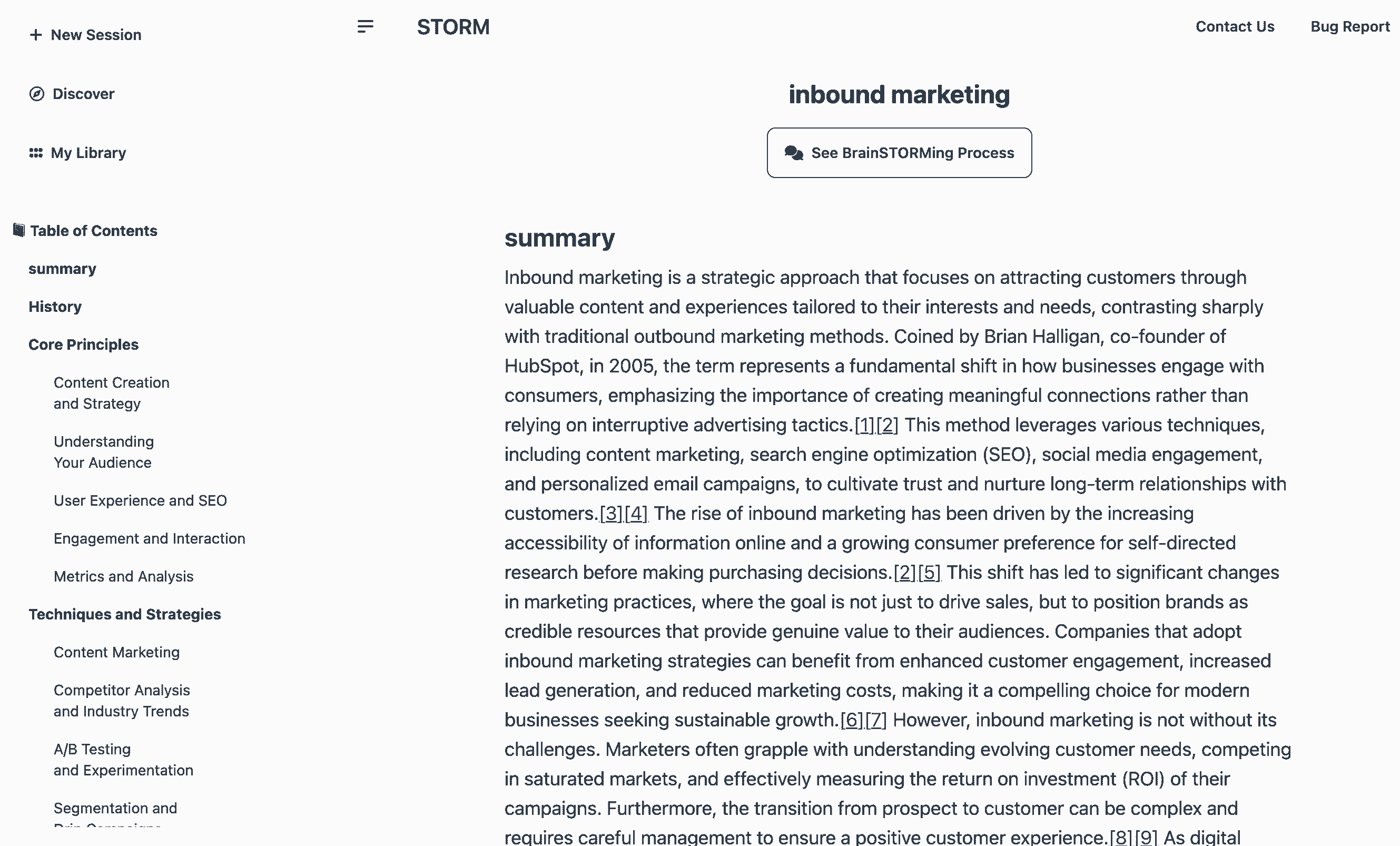
66Stanford's LLM-powered knowledge curation system. Generates Wikipedia-style articles with citations in ~3 min. 28K stars, 84.8% citation recall / 85.2% precision (peer-reviewed). MIT license.
Perplexity Deep Research
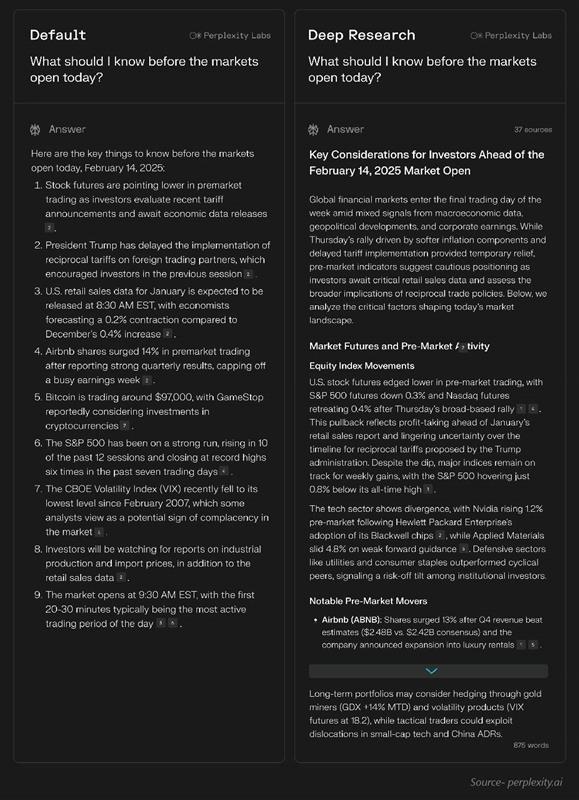
43Research-first search engine with inline citations. Fastest deep research (15-30s), 93.9% SimpleQA accuracy, 50+ sources per report. $20/mo Pro.
OpenAI Deep Research
42Agentic research mode powered by o3/o4-mini. 26.6% HLE (highest of any system), 72.57% GAIA, MCP support (Feb 2026). Slower (3-15 min) but deepest reasoning.
Public evidence
Near-viral reception. 'DeepSeek moment' comparison signals major disruption potential.
18K stars in ~6 months since Sep 2025 launch. Strong organic growth.
Matches or exceeds OpenAI o3 on multiple benchmarks while being fully open-source.
Efficient MoE architecture enables local deployment without enterprise GPU infrastructure.
Production deployment at scale validates beyond benchmarks.
Raw GitHub source
Constrained peek so you can sanity-check the source material without leaving the site.
👏 Welcome to try Tongyi DeepResearch via our <img src="https://raw.githubusercontent.com/Alibaba-NLP/DeepResearch/main/assets/tongyi.png" width="14px" style="display:inline;"> Modelscope online demo or 🤗 Huggingface online demo or <img src="https://raw.githubusercontent.com/Alibaba-NLP/DeepResearch/main/WebAgent/assets/aliyun.png" width="14px" style="display:inline;"> bailian service!
[!NOTE] This demo is for quick exploration only. Response times may vary or fail intermittently due to model latency and tool QPS limits. For a stable experience we recommend local deployment; for a production-ready service, visit <img src="https://raw.githubusercontent.com/Alibaba-NLP/DeepResearch/main/WebAgent/assets/aliyun.png" width="14px" style="display:inline;"> bailian and follow the guided setup.
We present <img src="https://raw.githubusercontent.com/Alibaba-NLP/DeepResearch/main/assets/tongyi.png" width="14px" style="display:inline;"> Tongyi DeepResearch, an agentic large language model featuring 30.5 billion total parameters, with only 3.3 billion activated per token. Developed by Tongyi Lab, the model is specifically designed for long-horizon, deep information-seeking tasks. Tongyi DeepResearch demonstrates state-of-the-art performance across a range of agentic search benchmarks, including Humanity's Last Exam, BrowseComp, BrowseComp-ZH, WebWalkerQA,xbench-DeepSearch, FRAMES and SimpleQA.
Tongyi DeepResearch builds upon our previous work on the <img src="https://raw.githubusercontent.com/Alibaba-NLP/DeepResearch/main/assets/tongyi.png" width="14px" style="display:inline;"> WebAgent project.
More details can be found in our 📰 <a href="https://tongyi-agent.github.io/blog/introducing-tongyi-deep-research/">Tech Blog</a>.
<p align="center"> <img width="100%" src="https://raw.githubusercontent.com/Alibaba-NLP/DeepResearch/main/assets/performance.png"> </p>You can directly download the model by following the links below.
| Model | Download Links | Model Size | Context Length |
|---|---|---|---|
| Tongyi-DeepResearch-30B-A3B | 🤗 HuggingFace<br> 🤖 ModelScope | 30B-A3B | 128K |
[2025/09/20]🚀 Tongyi-DeepResearch-30B-A3B is now on OpenRouter! Follow the Quick-start guide.
[2025/09/17]🔥 We have released Tongyi-DeepResearch-30B-A3B.
This guide provides instructions for setting up the environment and running inference scripts located in the inference folder.
conda or virtualenv.# Example with Conda
conda create -n react_infer_env python=3.10.0
conda activate react_infer_env
Install the required dependencies:
pip install -r requirements.txt
Configure your API keys and settings by copying the example environment file:
# Copy the example environment file
cp .env.example .env
Edit the .env file and provide your actual API keys and configuration values:
Note: The
.envfile is gitignored, so your secrets will not be committed to the repository.
The system supports two input file formats: JSON and JSONL.
Option 1: JSONL Format (recommended)
.jsonl extension (e.g., my_questions.jsonl)question and answer keys:
{"question": "What is the capital of France?", "answer": "Paris"}
{"question": "Explain quantum computing", "answer": ""}
Option 2: JSON Format
.json extension (e.g., my_questions.json)question and answer keys:
[
  { "question": "What is the capital of France?", "answer": "Paris" },
  { "question": "Explain quantum computing", "answer": "" }
]
Important Note: The answer field contains the ground truth/reference answer used for evaluation. The system generates its own responses to the questions, and these reference answers are used to automatically judge the quality of the generated responses during benchmark evaluation.
question fieldeval_data/file_corpus/ directory{"question": "(Uploaded 1 file: ['report.pdf'])\n\nWhat are the key findings?", "answer": "..."}